Sarajevo · History · Austro-Hungarian heritage
Vijećnica (Sarajevo City Hall)
Sarajevo's Moorish-style City Hall, burned in 1992 with 2 million books and reopened in 2014. Tickets, hours and what to see inside.
- Time needed
- 45 minutes to 1 hour
- Region
- Sarajevo
Why visit Vijećnica (Sarajevo City Hall)?
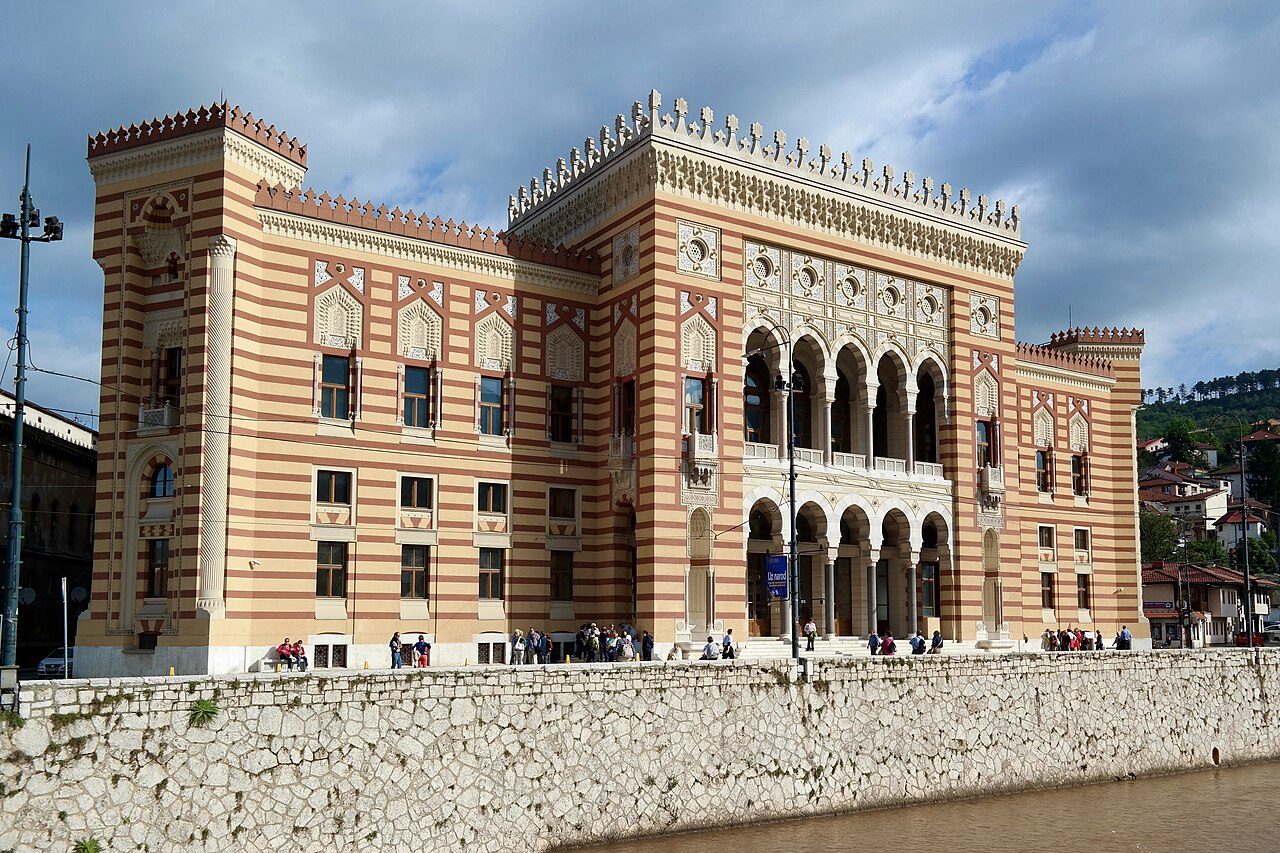
Vijećnica is Sarajevo's most beautiful building and one of its saddest stories. It was built between 1891 and 1896 by the Austro-Hungarians in a pseudo-Moorish style, designed first by Alexander Wittek and finished by Ćiril Iveković. From 1949 it was the National and University Library of Bosnia and Herzegovina.
On the night of 25 to 26 August 1992, it was hit by incendiary shells during the siege. The library burned, along with about 2 million books, manuscripts and documents. Restoration took nearly 20 years, and Vijećnica reopened on 9 May 2014.
Things to do
- The central hall: Stained glass, a glass ceiling, and painted columns and arches in red, blue and gold. This is the main reason to go.
- The staircase and upper galleries: Best views of the hall from above.
- The basement exhibitions: The story of the building's construction, burning and reconstruction, plus "Sarajevo 1914-2014", an exhibition on the city's last hundred years.
- The outside: The striped facade on the river is one of the most photographed views in Sarajevo, especially at night.
Getting there
At the eastern end of Baščaršija, on the river. Tram stop: Vijećnica.
Practical info
- Entry
- 10 KM adults, 5 KM children, students and seniors, 8 KM per person in groups of 10 or more
- Open
- Daily 9:00 to 17:00, except during official events
- Last checked
- October 2026. Prices and hours change, so confirm before you go.
FAQ
Why was Vijećnica burned?
It was shelled with incendiary rounds during the Siege of Sarajevo in August 1992. The fire destroyed the National Library's collection.
Is Vijećnica open to visitors?
Yes, daily from 9:00 to 17:00 unless there is an official event. It also still hosts city council sessions.
Is it worth paying to go inside?
Yes. The interior hall is the highlight, and the exhibitions explain one of the most important stories of the war.